


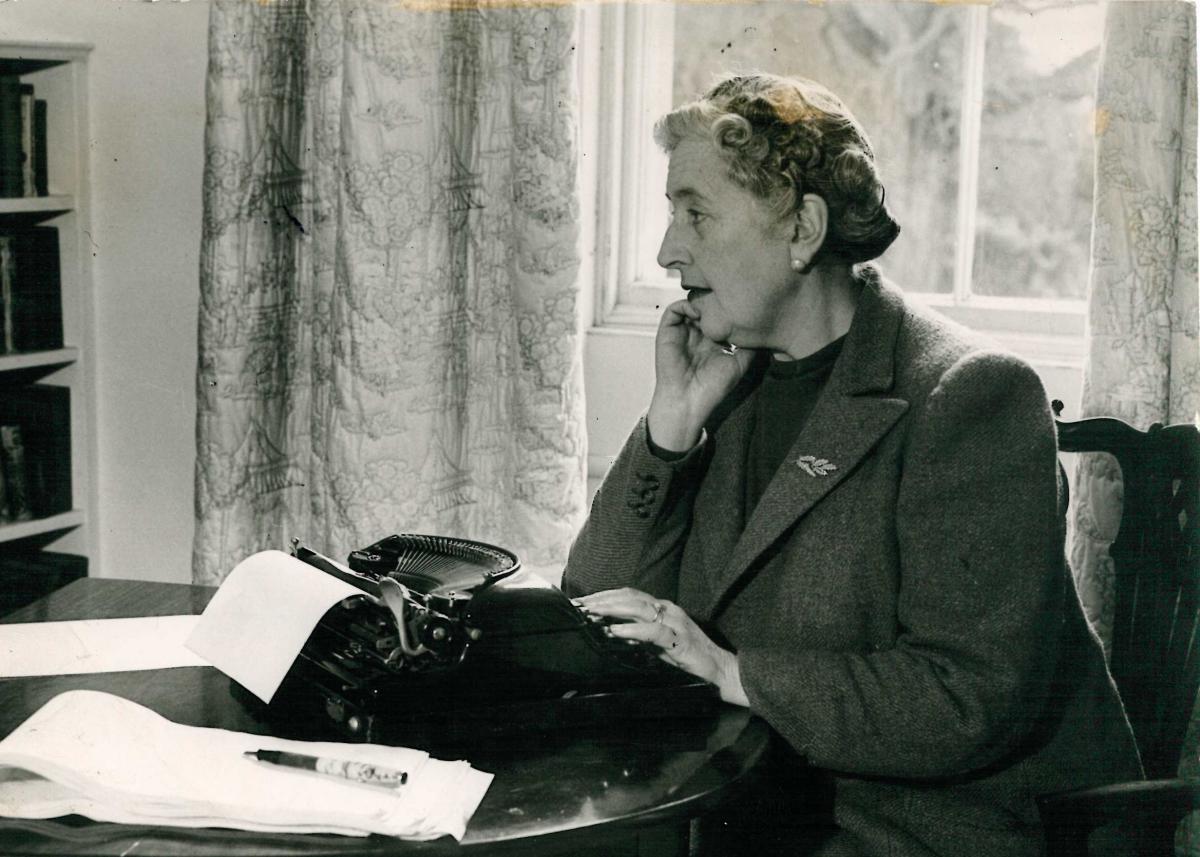


BBC historian Lucy Worsley has provided an alternative view on Agatha Christie's infamous 11-day disappearance.
Known for her gripping mysteries, the bestselling novelist vanished on December 3, 1926, sparking a media frenzy and a massive manhunt.
The story has often been shrouded in mystery, with various speculations surrounding her absence.
Some believed it was a publicity stunt, while others thought her husband was involved in foul play.
Christie's car was found abandoned at the top of a cliff, and she was eventually discovered at a Yorkshire hotel, using the surname of her husband's mistress.
However, Worsley suggests that Christie's disappearance was not a mystery at all, but rather a result of severe mental illness.
According to Worsley, Christie likely entered a "fugue state," a period of temporary amnesia, due to overwhelming life stressors.
These included the death of her mother, her husband's infidelity, and the pressure of producing a follow-up to her successful novel, The Murder of Roger Ackroyd.
In addition to these stressors, Christie was reportedly experiencing suicidal thoughts and other symptoms that would today be recognised as depression.
In a rare 1928 interview with the Daily Mail, Christie herself alluded to her mental state at the time of her disappearance.
"That night I felt terribly miserable. I felt that I could go on no longer," she said.
"I left home that night in a state of high nervous strain with the intention of doing something desperate."
READ MORE: Untreated sewage discharged by Thames Water travels 80 miles through Oxfordshire

She described how she let her car run off the road, and after hitting her head, began wandering around in a state of confusion.
She then assumed the identity of "Mrs. Theresa Neele," heading to a hotel in Harrogate.
At the hotel, she participated in events, joined evening dances, purchased new clothes, and socialised with other guests.
However, her true identity was eventually uncovered by those who recognised her from media reports.
Despite the widespread speculation at the time, Christie herself never directly addressed the incident in her autobiography.
She did, however, reference a period of insomnia, forgetfulness, and sadness triggered by her husband's infidelity and the collapse of her marriage, leading to a "nervous breakdown."
Worsley argues that the truth of Christie's mental health struggles was largely overshadowed by the more sensational narrative of a publicity stunt or murder plot.
"The thing is, people didn't want to hear what she had to say because it was uncomfortable, it was difficult to hear; it was a story about mental illness," Worsley said.
While the story of Christie's disappearance has become a part of her legacy, Worsley suggests it was not a crafted mystery but rather a reflection of the author's personal battles.
"It may have been accidental, and deeply unpleasant," Worsley concludes, "but it would also become a central plank of her massive success."


Share