

Archaeologists from Oxford have discovered what are thought to be the oldest examples of human decorations in the world.
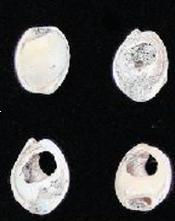
The international team of archaeologists, led by Oxford University's Institute of Archaeology, have found shell beads believed to be 82,000 years old from a limestone cave in Morocco.
Institute director Prof Nick Barton said: "Bead-making in Africa was a widespread practice at the time, which was spread between cultures with different stone technology by exchange or by long-distance social networks.
"A major question in evolutionary studies today is 'how early did humans begin to think and behave in ways we would see as fundamentally modern?' "The appearance of ornaments such as these may be linked to a growing sense of self-awareness and identity among humans and cultural innovations must have played a large role in human development."
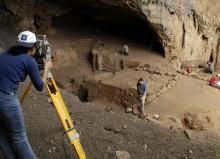
The handmade beads were found at the Grotte des Pigeons, Taforalt, in Eastern Morocco during a four to five year excavation in the region.
Prof Barton said the finds suggest that humans were making purely symbolic objects 40,000 years before they did it in Europe.
The beads themselves comprise 12 Nassarius shells - Nassarius are molluscs found in warm seas and coral reefs in America, Asia and the Pacific - which had holes in them and appeared to have been suspended or hung. They were covered in red ochre.
Similar beads have been found at sites in Algeria, Israel and South Africa which are thought to date back to around the same time or slightly after the finds from Taforalt.
The team, which includes archaeologists from Morocco, France and Germany as well as the UK, believe that similar shells are present in other sites in Morocco.
Dating results from the shells are still awaited, but the team believe some may be even older than those found in Taforalt.
The team has recently secured funding for a further four to five years of research in the area from the Natural Environment Research Council. Further research will look at early humans in Africa and how they spread around the world.
A paper on the team's findings is featured in this month's edition of Proceedings of the National Academy of Sciences, published today.


Comments: Our rules
We want our comments to be a lively and valuable part of our community - a place where readers can debate and engage with the most important local issues. The ability to comment on our stories is a privilege, not a right, however, and that privilege may be withdrawn if it is abused or misused.
Please report any comments that break our rules.
Read the rules hereComments are closed on this article